What is an IPO Timetable?
The IPO timetable is a complete schedule that highlights all the important events and dates related to an Initial Public Offering. It covers the IPO opening date, closing date, allotment status, refund initiation, Demat credit, and listing date. By following this timeline, investors can track the entire IPO process step by step and plan their funds better. Missing out on these dates may lead to confusion, delays in refunds, or even missing the listing day opportunity.
Key Dates in an IPO Timetable
- Issue Opening & Closing Dates: The official window when investors can apply for shares. This period usually lasts 3–5 working days, and applications cannot be made after closure.
- Allotment Date: The day when the registrar finalizes which investors have been allotted shares based on demand and category-wise reservation.
- Refund Date: For investors who did not receive allotment, the blocked funds are released back to their bank account/UPI within a few working days.
- Credit to Demat: Once allotment is confirmed, shares are directly credited to the investor’s Demat account, ready for trading.
- Listing Date: The most awaited date, when the shares start trading on NSE/BSE. Many investors look for potential listing gains on this day.
Why is the IPO Timetable Important?
The IPO timetable is crucial because it keeps investors informed at every stage of the process. For example, if you know the refund initiation date, you can plan your capital for the next IPO. Similarly, being aware of the credit-to-Demat date ensures you are ready to trade the stock from the very first day of listing. It also helps investors avoid panic if refunds or share credits are slightly delayed, since official timelines are clearly available in advance.
Moreover, understanding the IPO schedule is vital for those who apply in multiple IPOs. Since several IPOs may run back-to-back, keeping track of dates helps manage funds effectively. It also reduces chances of missing allotment tracking or refund checks.
Step-by-Step Breakdown of an IPO Timeline
- Filing DRHP: Company submits draft prospectus to SEBI.
- SEBI Approval: SEBI verifies details and approves IPO launch.
- Price Band Announcement: Company declares the minimum and maximum issue price.
- IPO Subscription Window: Usually open for 3 working days, where investors can apply.
- Bid Collection: All bids are collected and demand analysis is done.
- Allotment Finalization: Registrar allocates shares category-wise.
- Refund Initiation: Non-allottees get their money unblocked or refunded.
- Demat Credit: Allotted shares are transferred to Demat account.
- Stock Listing: Shares listed on NSE/BSE and open for trading.
Benefits of Tracking IPO Timetable
- Better Fund Planning: Helps investors allocate capital across multiple IPOs.
- Reduced Confusion: Clear dates avoid unnecessary stress regarding refunds or allotments.
- Trading Preparation: Investors can plan entry/exit strategy on listing day.
- Portfolio Diversification: Quick decisions based on allotment can help diversify faster.
Risks of Ignoring IPO Timetable
- Missing allotment updates and losing the chance to trade early.
- Confusion about refund timelines, leading to liquidity issues.
- Failure to sell or buy on listing day due to unawareness.
- Poor fund management across overlapping IPOs.
Real-Life Examples of IPO Timetables
For example, during the Zomato IPO (2021), the subscription window was open from July 14–16, allotment was finalized on July 22, refunds were initiated on July 23, shares were credited on July 26, and listing happened on July 23. Investors who followed the timetable closely were well-prepared for trading and booking profits.
Similarly, LIC IPO (2022) had a longer subscription window because of its scale. Investors who missed refund tracking ended up panicking unnecessarily, even though SEBI timelines were clearly mentioned.
Frequently Asked Questions
- Q: Where can I check the IPO allotment?
A: Allotment status is published on the registrar’s website (like KFinTech, Link Intime), and also on the official NSE and BSE websites. - Q: When are IPO refunds processed?
A: Refunds are generally initiated within 2–3 working days of allotment. In case of delays, investors should contact their bank or broker. - Q: What if shares are not credited to my Demat account?
A: First check with your broker and registrar. If the issue persists, raise a ticket with SEBI SCORES portal for resolution. - Q: Can I sell shares on listing day?
A: Yes, once shares are credited to your Demat account, you can sell them on NSE or BSE from the very first day of listing. - Q: What happens if listing is delayed?
A: Rare but possible in special cases. SEBI and exchanges notify investors immediately about new listing timelines.
Checklist for Investors Before IPO
- Maintain sufficient funds in bank account linked to UPI.
- Ensure PAN is linked with Aadhaar.
- Verify that your Demat account is active and functional.
- Apply at the cut-off price for higher chances of allotment.
- Keep track of refund and allotment dates to manage liquidity.
Future Outlook of IPO Schedules
As more companies in India plan to go public, IPO timetables will become increasingly important. Tech startups, fintechs, renewable energy firms, and EV companies are expected to launch IPOs in coming years. Government disinvestment plans (PSUs) will also add to the IPO pipeline.
Investors who build the habit of tracking IPO calendars will always have an edge over others. With digital platforms and apps, it has become much easier to follow timelines without missing updates.
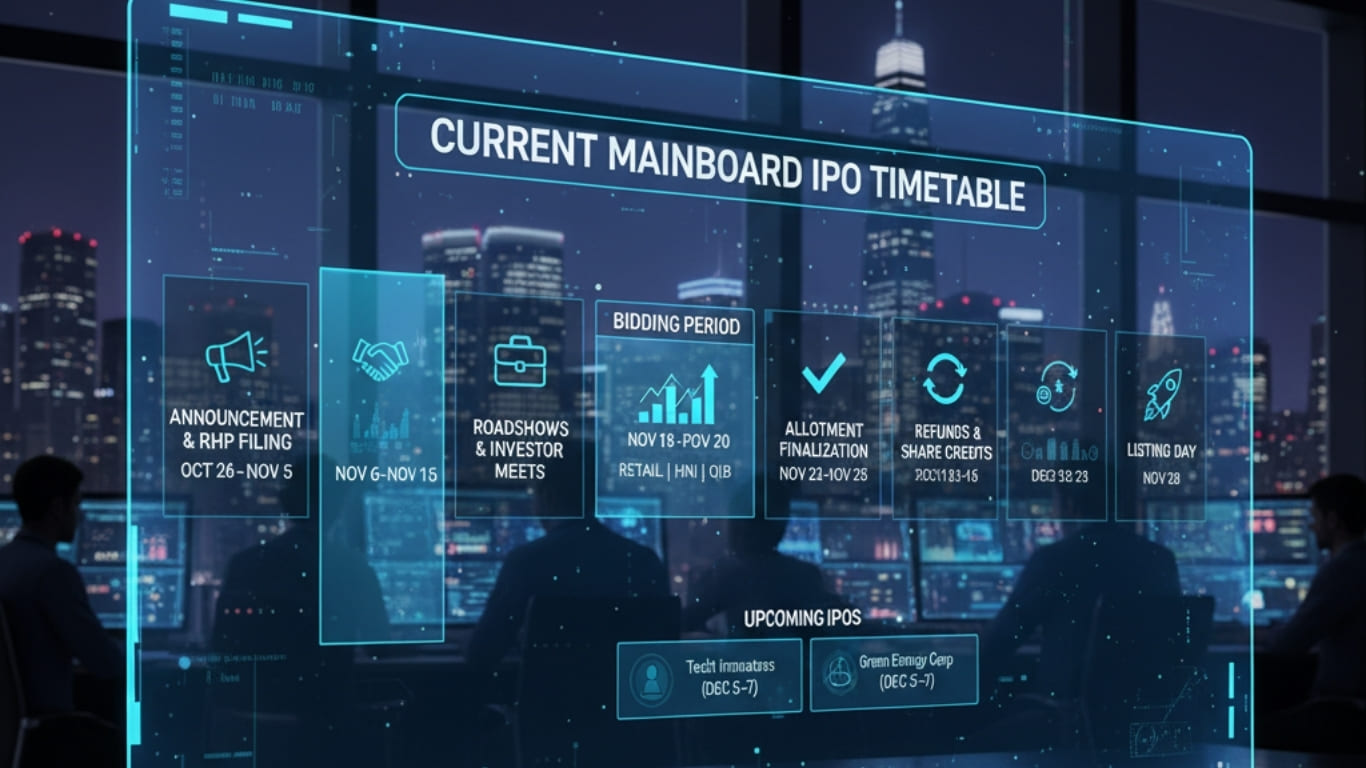
Complete IPO Schedule
Get the entire IPO calendar in one place, ensuring you never miss any important date. This helps investors stay fully prepared for allotments, refunds, and listings.

Allotment Updates
Track allotment status directly through registrar websites and know whether you received the shares or not within minutes of announcement.

Refunds & Demat Credit
Stay updated on refund timelines and Demat credits, ensuring your funds and shares are always where they should be without unnecessary delays.